
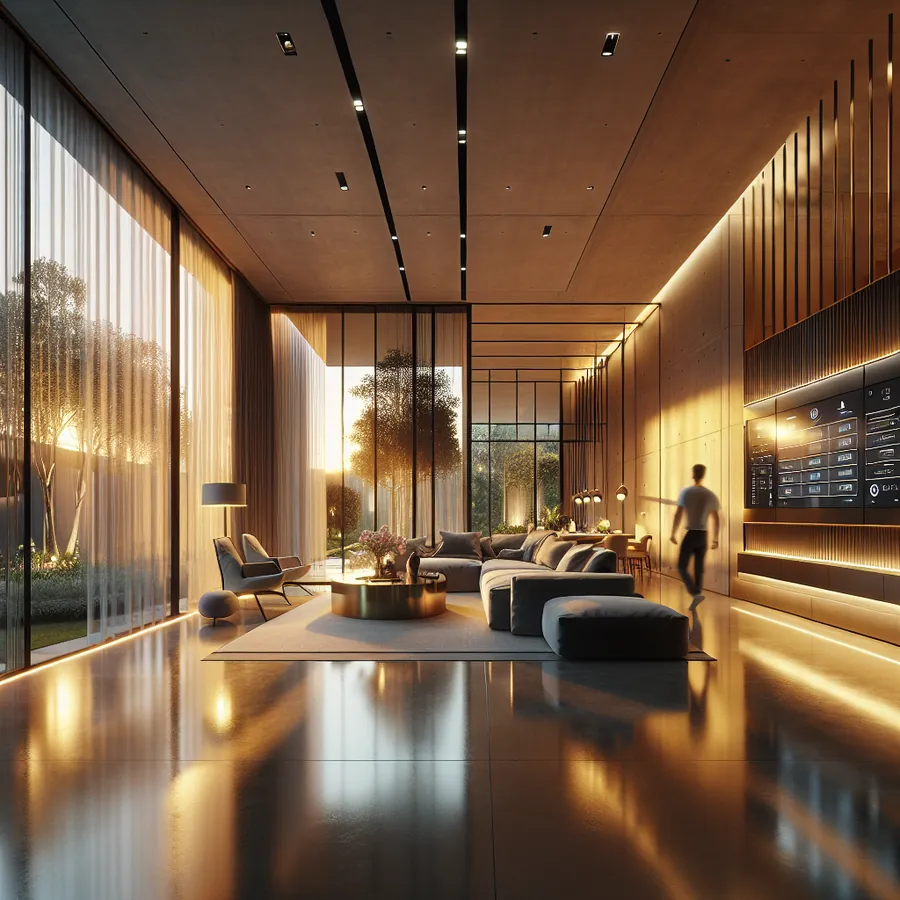
Why We Put Lutron Lighting Behind Control4 — 25 Years of Doing Both
We've been a Lutron dealer since 1999 and one of the first three dealers Control4 ever signed. In that time we've put in houses running Control4 lighting, houses running Lutron alone, and a great many running both. The combination is what we specify by default, and it's worth saying why — including the cases where we don't.
The short answer
Control4 is very good at being the brain of a house: sources, video, audio, cameras, third-party devices, and the app that ties it together. Its driver library is the broadest in the business, which matters enormously when you buy something in three years that nobody has heard of yet.
Lutron is very good at one thing, and does it better than anyone: making light behave.
Put them together and each does what it's best at. That's the whole argument, but the details are where it earns its keep.
What "making light behave" actually means
This is the part that doesn't demo well and matters every single day.
Low-end performance. Modern LED fixtures are difficult loads. Different drivers, different minimum thresholds, different failure behaviour — some flicker near the bottom, some drop out entirely, some buzz. What separates good dimming from adequate dimming is what happens in the bottom 10%, because that's where evening lighting lives.
Lutron gives you a low-end trim per dimmer — a minimum output matched to that specific fixture. Set properly, a light fades smoothly to nothing instead of stepping off. It's an unglamorous adjustment that is the difference between lighting that feels considered and lighting that feels twitchy.
It also has to be done by eye, in the room, at night. Nobody can see your fixture flicker from a distance. It's one of the very few jobs in a modern system that genuinely requires someone standing there, and it's the step most often skipped.
Fade behaviour. How long a change takes does more for how a house feels than brightness does, and almost nobody adjusts it. One second reads as a switch. Three to five reads as a room changing. A goodnight scene wants ten or fifteen so you're not plunged into darkness mid-stairs.
The thing on the wall. In a house where someone chose the door handles carefully, the keypad next to them matters. Engraving, finishes, and a range that fits a designed interior rather than fighting it.
The architectural reason, which matters more
Lutron runs its own processor. It does not need Control4 for anything.
So if the Control4 side is down — a failed controller, an OS upgrade in progress, a network fault, a driver misbehaving — every light in the house still works from every keypad on the wall.
That's not redundancy for its own sake. It's a judgment about what kind of thing lighting is. Lighting is infrastructure: if it stops, the house stops being usable. Television and whole-home audio are conveniences: if they stop, you're annoyed and you carry on. Infrastructure shouldn't depend on convenience.
A house where a failed entertainment controller means nobody can turn a light on is a house that was designed without that distinction in mind. We've been called to enough of them to feel strongly about it.
Where Control4's own lighting is the better answer
We'd be lying if we said always Lutron. Cases where we wouldn't:
Small projects where the budget is real. If lighting control is six or eight loads and the money is better spent elsewhere, adding a second system and its processor is hard to justify. Control4's own lighting does the job.
Retrofits with awkward wiring. Sometimes what's physically possible in the walls decides it, and the theoretically better answer isn't installable without opening ceilings.
Where nobody local can service Lutron. A slightly less refined system somebody can fix beats a better one nobody will touch. This is a real constraint in some places and worth asking about before you commit.
Where the household genuinely doesn't care. Some people want lights that go on and off, and every pound spent on dimming quality is wasted on them. That's a legitimate position and we'd rather find out early.
Where we'd tell you to skip both
If your needs are modest — lighting and shades in a normal house, no whole-home audio, no video distribution — you may not need a head-end automation system at all.
Lutron's retail tier, Caséta, does more than people expect. You can install it yourself, program it in the app, put Pico remotes where you want controls, and never involve a dealer. If someone quoted you for Caséta programming, get a second opinion.
Selling somebody a two-system architecture for a house that wanted good dimming and a schedule is the mistake we most want to avoid making.
What to ask any dealer proposing both
- "Can you program both sides?" Lighting programming on a top-tier Lutron system needs a certified installer account for Lutron's software. Control4 changes need Composer Pro, gated on dealer credentials. Different credentials. A company that has one may not have the other, and you'll be co-ordinating two firms.
- "Will the lights work if the Control4 controller is off?" The answer should be yes without hesitation.
- "Is low-end trim included, and when will it be set?" It has to happen at night, after fixtures are in. If it's not on the schedule, it's not happening.
- "Can I have copies of both project files?" Ask at install time, when it costs nothing.
- "Are network reservations set for every device?" The most common way a combined house breaks is a router replacement moving the lighting processor's address. Half an hour of work prevents years of confusion.
If you already have both
Most of what makes a combined house good or bad is programming rather than equipment — scene composition, fade times, which system owns what, whether the trim was ever set.
All of that is adjustable without buying anything, and most of it is done remotely. The exception is the trim, which is a visit, and worth booking as one job across the whole house rather than a fixture at a time.
Tell us what you have on both sides and what irritates you, and we'll tell you whether it's programming, a setting you can change yourself, or genuinely hardware. Combined Control4-and-Lutron houses are most of what we work on.
