Ixome — the future of home automation. Older system? We upgrade it remotely.Upgrade my system →See it live →
IXome
← Back to Community
Energy-Saving Smart Lighting Strategies for 2026: The Complete Expert Guide

Energy-Saving Smart Lighting Strategies for 2026: The Complete Expert Guide

@IxomeExpert7 min read

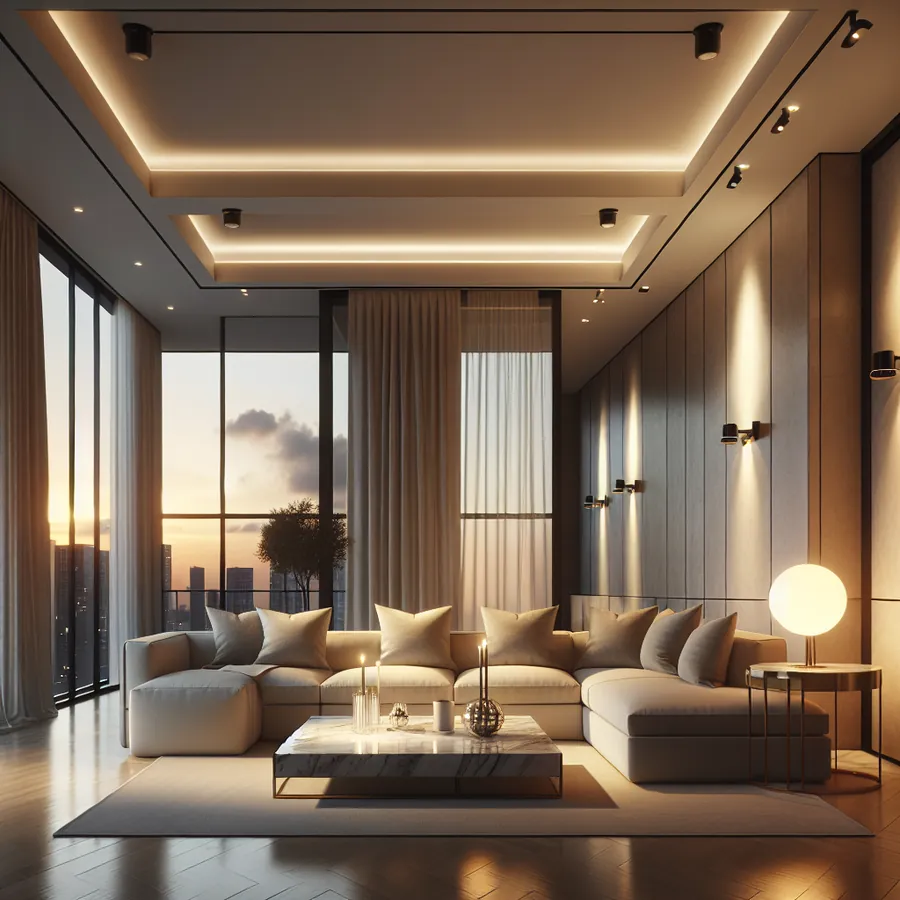
Imagine walking into your home as the sun sets, and without lifting a finger, your lights gradually illuminate to the perfect warmth—not too bright, not too dim—while simultaneously reducing your energy bill by up to 40%. This isn't science fiction; it's the reality of intelligent lighting design in 2026, and it's more accessible than ever.

As energy costs continue to climb and environmental consciousness becomes non-negotiable, smart lighting has evolved from a luxury convenience to an essential home investment. But here's what most homeowners don't realize: the difference between a mediocre smart lighting setup and a truly energy-efficient system lies not in the bulbs themselves, but in the strategy behind their deployment.

At IxomeAI, we've spent years working alongside Lutron HomeWorks dealers and lighting designers to understand what separates good installations from exceptional ones. Today, we're sharing the insider knowledge that transforms ordinary smart homes into energy-saving powerhouses.

Why 2026 Is the Tipping Point for Smart Lighting Efficiency

The smart lighting landscape has fundamentally shifted. New protocols like Matter 1.3 have finally delivered on the promise of true interoperability, while AI-driven automation has matured beyond simple schedules into genuinely predictive systems. Meanwhile, utility companies across North America and Europe are rolling out dynamic pricing models that reward intelligent energy management.

The convergence of these factors means that a well-designed smart lighting system installed today can pay for itself within 18-24 months—a timeline that was nearly impossible just three years ago.

Understanding Your Lighting Ecosystem: Compatibility Matters

Before diving into strategies, let's establish which systems play well together. The wrong combination of devices can create inefficiencies that negate your energy savings.

Smart Lighting Protocol Compatibility Matrix

Protocol Energy Monitoring Local Processing Matter Compatible Best For
Lutron Clear Connect ✓ Advanced ✓ Full ✓ Bridge Required Whole-home luxury installations
Zigbee 3.0 ✓ Basic ✓ Hub Dependent ✓ Native Budget-conscious scaling
Z-Wave LR ✓ Detailed ✓ Full ✗ Bridge Required Security-focused homes
Wi-Fi (Thread) ✓ Cloud-based ✗ Limited ✓ Native Apartment dwellers
DALI-2 ✓ Professional ✓ Full ✗ Gateway Required Commercial crossover

Recommended System Pairings for Maximum Efficiency

Home Size Primary System Secondary Integration Expected Savings
Apartment (<1,500 sq ft) Philips Hue + Thread HomeKit/Google Home 20-25%
Medium Home (1,500-3,500 sq ft) Lutron Caseta Pro Home Assistant 25-35%
Large Home (3,500+ sq ft) Lutron HomeWorks QSX Crestron/Control4 35-45%
Estate/Multi-building HomeWorks + DALI-2 Custom Integration 40-50%

For those considering a HomeWorks installation, working with a certified dealer is essential. The system's power lies in its programming flexibility, and an experienced integrator can implement energy-saving scenes that would be impossible to configure independently. Check our community thread on finding qualified HomeWorks dealers in your area.

Step-by-Step: Building Your Energy-Saving Lighting Strategy

Step 1: Conduct a Lighting Audit

Before purchasing a single smart bulb, document your current lighting situation:

  1. Count every fixture and note the bulb type (incandescent, CFL, LED, halogen)
  2. Track usage patterns for two weeks using a simple spreadsheet
  3. Identify "always-on" zones where lights are frequently left burning
  4. Note natural light sources and how they change throughout the day
  5. Calculate current consumption using your utility bill as a baseline

This audit reveals where smart controls will have the greatest impact. Most homes discover that 60-70% of their lighting energy waste occurs in just 3-4 zones.

Step 2: Prioritize High-Impact Zones

Not all rooms benefit equally from smart lighting. Focus your initial investment on:

Tier 1 (Highest ROI):

  • Kitchen and dining areas (high usage, often over-lit)
  • Living rooms with multiple fixtures
  • Home offices with variable daylight
  • Outdoor and landscape lighting

Tier 2 (Moderate ROI):

  • Bedrooms (circadian rhythm benefits add value)
  • Bathrooms (occupancy sensing prevents waste)
  • Hallways and staircases (motion activation)

Tier 3 (Convenience-Focused):

  • Closets and storage areas
  • Utility rooms
  • Guest spaces

Step 3: Implement Layered Control Strategies

The most efficient smart lighting systems use multiple control methods simultaneously:

Occupancy + Daylight Harvesting Combine motion sensors with light-level sensors to maintain consistent illumination while using only the energy necessary. A properly calibrated daylight harvesting system in a room with good natural light can reduce artificial lighting needs by 50-70% during daytime hours.

Time-Based Dimming Curves Program your lights to follow the sun's intensity. Morning lights should gradually increase, peak at midday, and slowly warm and dim as evening approaches. This isn't just energy-efficient—it supports your circadian rhythm.

Scene-Based Optimization Create scenes that use the minimum light necessary for each activity. A "Movie Night" scene might use 10% of your living room's total capacity, while "Cleaning" uses 100%. The key is making these scenes easily accessible so family members actually use them.

Step 4: Configure Intelligent Automation Rules

Here's where the magic happens. Modern automation platforms allow for sophisticated "if-then" logic:

IF time is between sunset and 11 PM
AND living room is occupied
AND TV is OFF
THEN set living room to "Evening Reading" (40% warm white)

IF time is between sunset and 11 PM  
AND living room is occupied
AND TV is ON
THEN set living room to "Media Bias" (15% warm white, behind-TV only)

These contextual automations eliminate the "one size fits all" problem that wastes energy in most homes. Our community has an extensive thread on automation recipes that actually work.

Step 5: Monitor, Analyze, Optimize

Installation is just the beginning. The most successful energy-saving systems evolve over time:

  • Weekly: Review energy dashboards for anomalies
  • Monthly: Adjust automation rules based on seasonal changes
  • Quarterly: Audit scenes for relevance and efficiency
  • Annually: Evaluate new technology for potential upgrades

The AI Revolution: What's Changing in 2026 and Beyond

Artificial intelligence is transforming smart lighting from reactive to predictive. Here's what's now possible:

Predictive Occupancy

Advanced systems learn your household's patterns and pre-position lighting before you arrive. Your kitchen lights begin warming up at 6:47 AM because the AI knows you start coffee at 6:50 AM on weekdays. This eliminates the jarring experience of walking into darkness while maintaining efficiency.

Adaptive Comfort Optimization

AI systems now correlate lighting preferences with external factors—weather, calendar events, even biometric data from wearables. Feeling stressed? The system might automatically shift to warmer, dimmer tones. Hosting a dinner party? It references successful past events to recreate the perfect ambiance.

Grid-Responsive Intelligence

With utility companies offering real-time pricing APIs, AI-driven systems can make micro-adjustments during peak demand periods. A 10% reduction in brightness during a 4-hour peak window might be imperceptible to occupants but could save meaningful money over a billing cycle.

Integration with Renewable Energy

For homes with solar installations, AI lighting systems coordinate with battery storage and generation forecasts. Excess solar production might trigger slightly brighter ambient lighting, while cloudy afternoons prompt conservation modes.

The HomeWorks platform, in particular, has embraced these AI capabilities through its partnership with various home automation processors. A skilled dealer can configure these advanced features to work seamlessly within the Lutron ecosystem. Learn more about AI integration possibilities in our dedicated thread.

Frequently Asked Questions

How much can I realistically save with smart lighting? Most homeowners see 25-40% reductions in lighting-related energy costs. The exact figure depends on your starting point (homes with older incandescent bulbs see larger savings), the comprehensiveness of your system, and how diligently you use automation features. A well-designed system in a 3,000 sq ft home typically saves $300-600 annually.

Do smart bulbs use energy when turned off? Yes, but minimally. Smart bulbs in standby mode consume 0.1-0.5 watts to maintain wireless connectivity. Over a year, this "vampire draw" costs roughly $1-3 per bulb. Smart switches eliminate this issue entirely since they cut power to standard LED bulbs.

Is Lutron HomeWorks worth the investment for energy savings alone? HomeWorks is a premium system, and energy savings alone rarely justify the cost difference over mid-tier alternatives. However, when you factor in reliability (20+ year lifespan), whole-home integration capabilities, and resale value enhancement, HomeWorks often delivers superior total cost of ownership. The energy savings become a bonus rather than the primary justification.

Can I mix different smart lighting brands? Yes, especially with Matter-compatible devices. However, mixing brands often means sacrificing some advanced features and complicating automation. For maximum energy efficiency, we recommend standardizing on one ecosystem for primary lighting control, with secondary brands limited to accent or specialty applications.

How do I prevent family members from overriding energy-saving settings? This is more about design than technology. Create scenes that feel luxurious at efficient levels, make controls intuitive, and avoid automation that feels restrictive. If someone constantly overrides a setting, that's feedback that the automation needs adjustment—not that the person needs correction.

What's the best first step for someone completely new to smart lighting? Start with one high-impact room and a quality dimmer switch (Lutron Caseta is excellent for beginners). Live with it for a month, learn the app, experiment with schedules. This low-risk approach teaches you what you value before committing to a whole-home system.

Your Next Step: Personalized Guidance

Every home is unique, and the strategies that work brilliantly in one space might be completely wrong for another. That's why we've developed something special for the IxomeAI community.

Chat with our AI agent for a tailored setup recommendation. Share your home's specifics—square footage, existing systems, budget, and goals—and receive a customized roadmap for implementing energy-saving smart lighting. Our AI draws on thousands of successful installations to provide guidance that's actually relevant to your situation.

Start your personalized consultation →


For those ready to go deeper, IxomeAI Pro members gain access to our complete library of integration blueprints, dealer-negotiation guides, and advanced automation templates. Pro members also receive priority support from our team of certified smart home specialists—including direct connections to vetted HomeWorks dealers in their area.

The future of home lighting is intelligent, efficient, and beautiful. With the right strategy, you can have all three while watching your energy bills decline month after month. Welcome to 2026—your home has never been smarter.

Ready to go Pro?

Priority agent access, done-for-you upgrades, and a real quote for your home.

Let's Talk with Einstein